In some of my recent blogs I have talked about what soldiers ate, the kind of equipment they used, what they drank, and several other soldier related issues.
One of my cadets asked me one time what did you wear in Vietnam. Especially since it was so hot over there.
When I arrived in Vietnam I was wearing the standard United States Army khaki uniform. It was a summer weight uniform, and it was easy to travel in. The only problem that I ever had in travelling in khakis was when I went back to Vietnam in the late fall of 1970 we flew through Alaska and when I got there it was quite cold. To make matters even funnier, some of the Vietnamese officers that I was flying with wanted me to go out and take pictures of them in the snow. In some cases, they had never seen snow before. The only reason that they asked me to go with them to take the pictures was that I could speak some degree of Vietnamese.
They had a great time frolicking in the snow, making snow angels and having their picture taken. Meanwhile I was cold and miserable. But my counterparts rewarded me with a nice hot drink when we got back to the bar. Since we were flying on military aircraft, that was the last alcoholic drink that I had in the United States until I returned.
On my first tour in 1969, I arrived wearing the khaki uniform and was immediately sent to a large warehouse where we were issued three sets of fatigues, boots, and other combat related equipment. I had to take these new uniforms into a tailor shop on the tanzanite Air Force Base to have them tailored and to have my rank, my name tape, and my Mac V patch shown on to the uniforms.
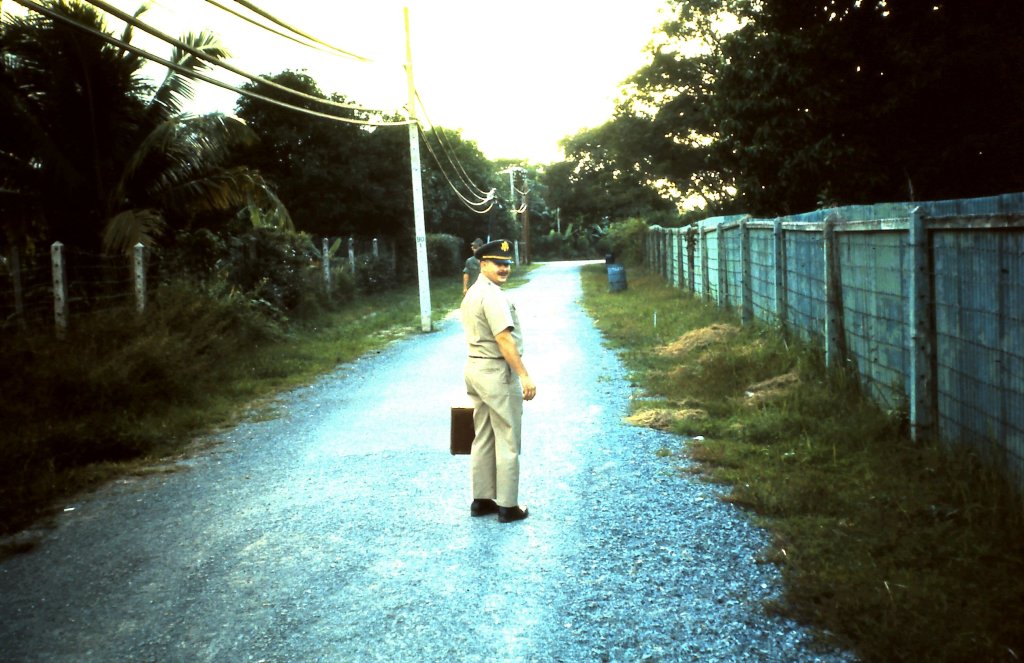
Standard Khaki Uniform (Saigon 1972)
The fatigue jacket was long sleeve, we usually rolled the sleeves up. Had had large pockets especially the top pockets which were slanted. Above the right pocket was a camouflaged version of my name tag and on the left pocket nothing. My rank and branch insignias were on the collar and in the long space where the buttons where I would place my Vietnamese rank Insignia as well. In my case as a Second Lieutenant, it was a single gold pip. When I made first Lieutenant that became a double pip, and when I went back to Vietnam as a captain it was a triple pip. In a very popular blog, I’ve posted what the Vietnamese and American ranks looked like side by side.
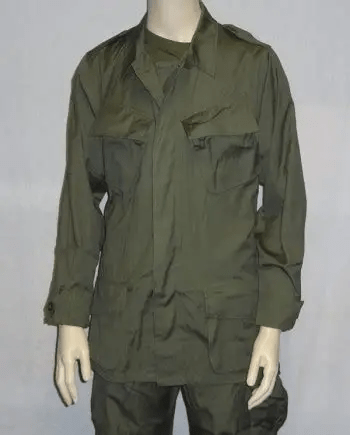
Jungle Fatigues, Jacket with Cargo-type Pants
The jacket was lightweight, but it did have a tendency to tear especially when I was working in the elephant grass or working my way through thick tram forests.
The pants contain two large cargo which is on each side. I liked them because I could carry my folded-up map in the pocket when I was in the field. In one of the pockets, I always carried an extra grenade pin, just in case. That was something that my Sergeant always taught me to do. He had been a drill Sergeant prior to coming to Vietnam and he relayed an incident to me where I young soldier had pulled the pin on his grenade and thrown the pen away instead of the grenade. He froze holding the grenade not knowing what to do and Fred told me that he pulled the pin out of his pocket and inserted a new pin into the grenade to safety it. So, following my sergeant’s ‘orders’ I always had an extra grenade pin.
The uniform also came with a OD green T-shirt and a pair of jungle boots. In a lot of cases when it was hot outside, we would ditch the jacket and just wear the OD green T-shirt. This was especially true if we were just sitting around the team house where we were doing work inside. My captain was insistent that when we were outside that in most cases, we would wear our full uniform.
Let’s talk a little bit about boots.
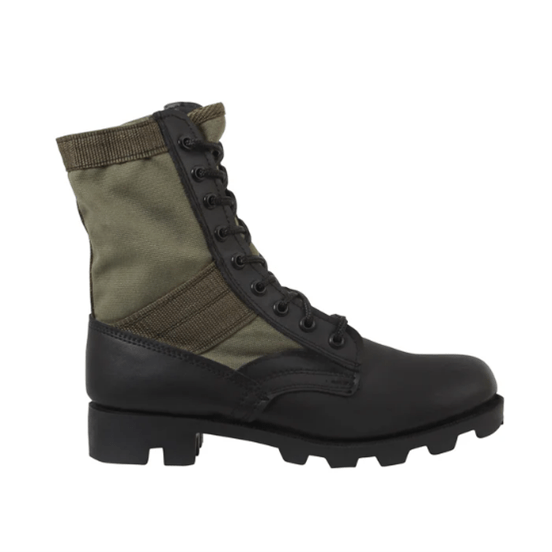
- Canvas & Nylon Upper
- Slip and Oil Resistant Sole
- Aluminum Eyelets and Steel Shank
“Vietnam era jungle boots are lightweight, durable and comfortable, performing well under both wet and dry conditions. The combination of canvas and leather, along with the Panama sole allows for rapid drying, mud shedding, and ventilation reducing the risk of blisters and tropical ulcers. They were variable available in narrow and extra narrow sizes reflecting the original military specifications.”
The boots themselves were comfortable, but when we were working in the Mekong delta in the rainy season, they never were dry.
One of the problems that we had with the boots in the Mekong delta was the fact that the water and mud were very acidic, and it would literally bleach the black boot to the point where it would turn a gray patina. Once it hit that point, I don’t care how much black Polish you put on there you could never get it to do anything except shine Gray. But in a way there was an advantage to that. I can remember going into Saigon one time on a trip and I was at a bar and a couple of armchair warriors were bragging about their Vietnam exploits. Today we would refer to that as stolen valor.
One of the guys started talking about how rough his tour of Vietnam was working in Saigon until his buddy sort of pointed my boots out to him and said you better not talk about what we’re doing look at his boots. My boots indicated that I was a true warrior in their eyes. My boots weren’t black, they did shine, but they were patina gray. I kept those boots through all three tours in Vietnam.
As far as hats were concerned, we wore a baseball style cap but when we went to the field we wore something called a boonie cap.
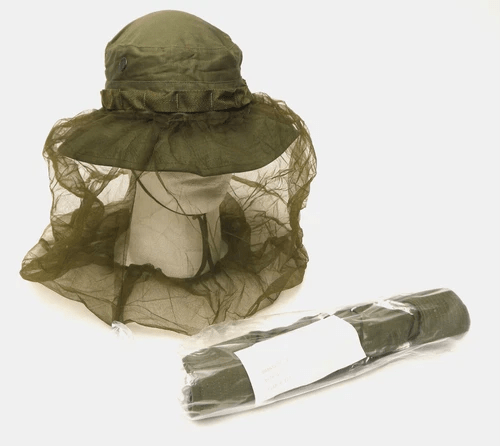
“Boonie Cap” with Mosquito Netting
Pictured here as the standard boonie cap that we were issued along with the mosquito netting. When I went to the field I traditionally wore the boonie cap as opposed to a helmet but as far as the mosquito netting is concerned I rarely used to that. If you ward in the field it actually trapped heat and it was quite uncomfortable. On night ambush I would sometimes use it as long as I was not one of the officers on watch.
The other hat that we wore was the standard baseball cap. Your camouflaged rank Insignia would go in the center of the cap. Most of the time when you were in the Garrison area or in our case just going downtown to have some breakfast or supper, we would wear the standard baseball cap.
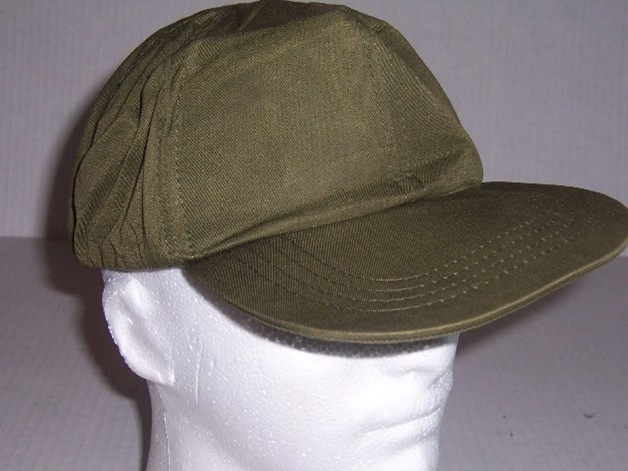
Standard ‘Baseball Cap”
The other standard issue where the boot socks. Buttocks were made of wool, and I always carried a couple of extra pair when I was in the field. The nice thing about the boot socks is when they got wet you could take them off and wrap them around the back of your pack and they would dry quickly. I would like to have a couple of extra pairs of dry socks usually always wrapped up in a plastic bag with me. Many of us who came home from Vietnam still have issues with various types of toe fungus. I went into the VA hospital for some care a while ago and I had to see the podiatrist. The first thing that he said when he looked at me after examining my toes was that you must have served in the Mekong delta. I laughed and said yes, I did, he said your toe fungus is very typical of all of the men that I’ve ever worked on who served there.
Occasionally if we were attending some type of a formal affair with our counterparts, we would wear our khaki uniforms. I guess you could call this our dress uniform in Vietnam. Other than a few occasions the only time I really wore my khakis was when I was going home on an airplane. When I served in Saigon, the khaki uniform was our standard uniform when I worked at the headquarters. But when I went to the field that was back end of the jungle Fatigues.
If you’re enjoying these blogs, please drop me a comment or if you have any questions that I might answer, again submit a comment on the comment pages. I’m always glad to hear from you.
Again, please look at all my books that I have listed. They can be purchased from Amazon.com with the click of a button directly from my website,
The Advisor Series:
- “The Senior Army Instructor” (Available on Amazon ASIN: B0GSXJ2ZHC)
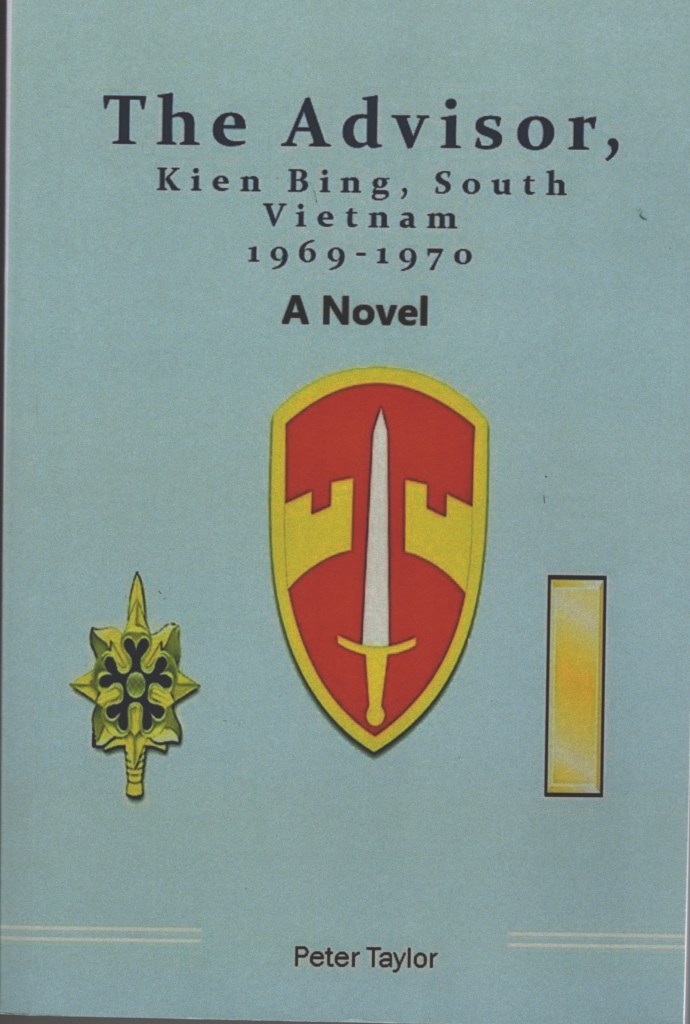
- “The Advisor, Kien Bing, South Vietnam, 1969-1970. A Novel” (Available on Amazon ASIN: B09L4X5NQ3)
- “The Province Senior Intelligence Advisor, Kien Song Province 1970-1971; A Novel” (Available on Amazon ASIN: B0BHL2XCX5)
- “The Hardchargers,” Vietnam 1972-1973; A Novel” (Available on Amazon ASIN: B0C7SPR1JY)
- “The Tuscarora Trail” (Available on Amazon ASIN: B0D3QY2GM6)
 Peter A. Taylor's Home Page
Leave a comment