There are special rooms in a number of buildings within the United States that are highly restricted areas. In the United States capitol building alone there are a number of very nondescript rooms behind doors in numbered hallways, and they look just like any other doorway in the capitol building. Most people have no idea that they’re even there. And what goes on inside of these rooms is rarely mentioned or discussed publicly. Military bases, naval ships, rooms in embassies across the world, various military headquarters, and throughout the Pentagon these rooms can be found.
What goes on behind these doors is highly classified. Here very secretive matters involving the US government or the military are discussed. Only those who have been specifically cleared to hear this information are allowed to attend these meetings. But just having the proper security clearances does not necessarily mean that you will be invited to attend. While someone might have a Top-Secret clearance they may not be allowed into these rooms to listen to these highly classified briefings. Not only do they need to be cleared they also have to have a “need-to-know”.
But unlike many offices, these rooms host entourages of military or intelligence officials throughout the day. Every now and then, glassy-eyed members of Congress, or a general officer or admiral will emerge, shaking their heads, looking as if they’ve just seen a ghost.
We call these rooms a SCIF (pronounced skiff) or a Sensitive Compartmented Information Facility that serve as secure rooms where those with top-secret clearance can view some of the country’s most classified information.
These facilities are specifically constructed to handle Sensitive Compartmented Information (SCI). The fundamental concept is to create a controlled environment where classified information can be stored, processed, discussed, and electronically handled without risk of unauthorized disclosure. SCIFs are comprehensive security systems, integrating various protective measures to defend against espionage and data exploitation.
SCIFs are designed to protect classified information, which is categorized by the potential damage its unauthorized disclosure could cause. For example, “Confidential” information could damage national security, “Secret” could cause serious damage, and “Top Secret” could lead to exceptionally grave damage. Sensitive Compartmented Information (SCI) represents an even higher tier, concerning intelligence sources, methods, or analytical processes. SCI requires handling exclusively within formal control systems like SCIFs to prevent adversaries from gaining insights into national capabilities, intentions, or vulnerabilities.
As a military intelligence officer, I have been required to operate inside of the SCIF a number of times. This requires that the individual not only have the proper security clearances, but they have to undergo an additional vetting process to ensure that they are capable of handling highly sensitive information. So how does this fit into my books?
When I was operating at the district level security breaches were not uncommon. We did not have the level of information where we were required to operate in a SCIF environment. While we had the proper clearances the information that we were dealing with generally was not considered to be that highly classified. We had to take special care to make sure that if we were discussing classified information that we did so in an area where we could not be overheard. The biggest concern was that one of our Vietnamese counterparts might overhear what we were saying, or someone could have planted a listening device in our area, or they were listening in to our communications.
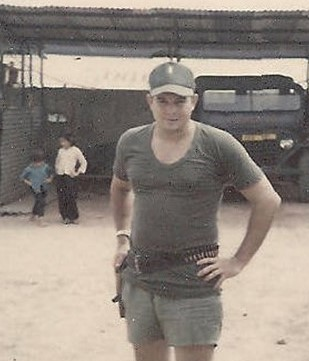
However, when I moved to the province level as the Province Senior Intelligence Adviser things changed. While I still had a Top-Secret clearance we weren’t operating in a highly classified arena at that point. But our Province Intelligence Operations Coordinating Center (PIOCC) had a guarded area where we could discuss operational activities. In the PIOCC each of the agencies had large maps of our area and these were generally covered with cloth so that what was posted wasn’t visible unless uncovered. However, I would have to go to Saigon on a monthly basis to brief General Creighton Abrams, the commander of the Military Assistance Command-Vietnam, on the intelligence situation within our province. We did these briefings in a special area that was referred to as the “Tank”, which was a SCIF that had been established at MACV headquarters. This room was highly controlled, and only those who were authorized entry were allowed to be there. It looked like any other briefing room but there were no windows and there were guards at the doors. Briefing materials had to be handed to a guard prior to entry. They would go through the materials check for the proper classifications and then put them in a secure area that you only had access to when you were actually on the podium presenting the briefing. You were not allowed to take a briefcase or any kind of a bag or any type of recording device in with you. Once you were called upon to do your briefing and your briefing was completed you were escorted out of the room in most cases, unless you were ordered to remain.
When I returned from my third tour of Vietnam in 1972, I was initially assigned to the 525 MI Group, and I worked in their SCIF. It was a large room with maps of all of Vietnam on the walls. Each map was covered, and you only had access to the room if you had the proper security clearances. Not only were we all cleared for Top Secret material we also had to undergo a special check in order to receive a special compartmentalized security access authorization. Nothing that was discussed in that room could be discussed outside except in another secure briefing area. The building itself was enclosed in barbed wire fencing, and we had a team that would go through and check for listening devices on a daily basis. This was a very secure room and building to operate in.
On the top of every safe that we had in the SCIF set a large rectangular device that was actually a large thermite grenade. If there was any sort of a direct threat against the building, we were directed to set these grenades off, and they would literally melt the safe and destroy everything that was inside of it. This would be accomplished in a matter of seconds. We also had large shredding machines and at night every scrap of paper, to conclude things like candy bar wrappers would be shredded. The shredded material would then be burned to ensure that nothing could be uncovered that might compromise what was going on.
We had to be especially careful to ensure that no one found out exactly what material we had coming in as far as classified information, how that material was being developed, and who the agents were that might be providing us that information. We had to be especially careful about protecting methods and sources of information. Even today that’s one of the most difficult things that anyone in the intelligence community has to deal with.
So why is that important? Let’s take a look at a historical scenario. During World War II we had captured a device called the “Enigma” machine. The German government did not realize that this machine had been stolen from an embassy. What this machine allowed us to do was to read the code that the Germans were using and translate it directly for intelligence purposes. We did not realize until the 1970s that this machine even existed, that’s how classified the information was.
This was a major source of intelligence for the allies during World War II. It was so secret that only a small number of people were even authorized to know about it. The concern was always that any information that was gathered through the use of the “Enigma” had to be secured. Had the Germans realized that we had an “Enigma” machine they would have immediately changed the codes and all of the intelligence that was being gathered would have been useless; protecting the source of this intelligence was critical.
Winston Churchill faced a terrible decision prior to the bombing of Coventry. He knew that the bombing was coming. Because the only source of information that he had come from the “Enigma” machine he was helpless to warn the citizens to evacuate the town. German intelligence could have very easily observed the evacuation of the town in advance of the bombing, and they would have immediately began searching for the leak in their intelligence system. The only thing that they could trace that leak to would have been the enigma machine. There were a number of other incidents throughout World War II where the allies were required to sit on their hands and do nothing when they knew what was coming. They had to protect the source of information.
The other concern with intelligence is the method of gathering the information. Intelligence officers are always looking to find out how something that the enemy knows was discovered. What was the method that was used not just to gather the information but to get that information to where it could be actually used. We deal with this as methods of operation.
So, in the SCIF not only can the information be discussed but the sources of the information and the methods used to collect the data can be discussed securely.
Jump forward another 20 years from my time in Vietnam and I was operating in another SCIF. To show you how protective we had to be we had a general officer that was visiting our command. We had a large joint reserve detachment that operated in our SCIF, and the army portion of that reserve detachment was under the command of his headquarters. He decided to come down for a visit. We provided him all of the proper briefings that he was authorized to receive, and we use the Commander-in-Chief’s briefing room to explain to him the mission of our particular organization. From this briefing area, called the ‘Command Bridge’, (it was a Navy command), he could look down into are SCIF and see some of the officers and men working down below in that area. He wanted to go down and talk to our officers. I indicated that we had to go down and secure the area first.
I sent one of the officers down to make sure that all the maps were properly covered and the computer screens were turned off and that any classified materials were properly secured so that the general could come down and visit. He was actually quite upset, he indicated he had a Top-Secret clearance, and he couldn’t understand why we were going through all of these hoops before he could come down and meet the army officers. I explained to him that well he might have the clearance that he did not have a “need-to-know” what the guys down there were actually doing. Unlike most reserve organizations our guys were working on actual ‘real world’ military missions. As a result, because these were classified missions, he didn’t have a “need-to-know” even though he had the proper clearances. It took us about 20 minutes to get things squared away before he could come down onto the floor.
He was a bit miffed at me. He finally went down to the ‘War Room’ and talked to the men down there. He was able to meet the men in our command and get a briefing on the operations of the Joint Detachment 206 reserve element. Just about the time that he was done he noticed two of our officers going back into another room at the back of our SCIF. He insisted on going in to talk to them. I tried to explain to him that I would have to go in and get the officers and have them come out into the main area to talk to him that he was not allowed in that area.
I tried to explain to him the fact that that was a “black room” and that’s where highly sensitive operations were planned and observed during operations. I told him that even I didn’t have access to that room unless I was specifically invited into the room by one of the officers there. Once again, I had to explain to him that even though he had all the clearances he was not cleared for special access, nor did he have a “need-to-know”.
So, the next time you see some addled congressmen or senior military officers walking out of a guarded room in the halls of Congress or at the Pentagon it might give you pause. They have just received a briefing that is highly sensitive and something that they are not allowed to talk about.
If you’re enjoying these blogs please drop me a comment or if you have any questions that I might answer, again submit a comment on the comment pages. I’m always glad to hear from you.
Again, please take a look at all of my books that I have listed. They can be purchased from Amazon.com with the click of a button directly from my website, www.ptaylorvietnamadvisor.com. Until next Friday, Have a good one.
Next Friday back to the US Civil War for a blog post about communications.
The Advisor Series:
- “The Senior Army Instructor” (Available on Amazon ASIN: B0GSXJ2ZHC)
- “The Advisor, Kien Bing, South Vietnam, 1969-1970. A Novel” (Available on Amazon ASIN: B09L4X5NQ3)
- “The Province Senior Intelligence Advisor, Kien Song Province 1970-1971; A Novel” (Available on Amazon ASIN: B0BHL2XCX5)
- “The Hardchargers,” Vietnam 1972-1973; A Novel” (Available on Amazon ASIN: B0C7SPR1JY)
- “The Tuscarora Trail” (Available on Amazon ASIN: B0D3QY2GM6)
Check out my website for other books that I’ve written or edited.
Website: ptaylorvietnamadvisor.com
 Peter A. Taylor's Home Page
Leave a comment