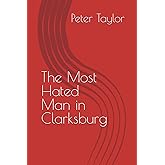
In conjunction with the Clarksburg History Museum, I have been asked to put together a tour of Clarksburg, West Virginia during the Civil War. The tour is based upon my historical novel “The Most Hated Man in Clarksburg” and showcases the city as it existed in May 1861 when Captain Charles Lieb first arrived in town to establish the federal Garrison here.
The tour begins at the museum, in the conference room, where I gave a brief biographical sketch of Captain Charles Lieb. I talked a little bit about his birth, his education, his association with George McClellan and other powerful men that he just seemed to meet or associate with, some of the most prominent men of his generation.
He grew up as a boyhood friend of George McClellan the future general of the Union Army. He even briefly accompanied McdClellan to West Point, but resigned within about two weeks of his arrival. He returned home to Philadelphia and became a doctor like his father. After graduating from medical school he decided to go West to Dubuque, Iowa where he established a medical practice.
While in Dubuque he treated a young army Sergeant who had been severely injured while working on an engineering project in the Mississippi River. His commanding officer, Montgomery Meigs, the future Quartermaster General of the entire Union Army during the Civil War, asked Doctor Lieb if he could save the man’s leg. As a result of a unique medical procedure, developed by a Native American shaman, they managed to treat the soldier, and he recovers his mobility.
Doctor Lieb Is hoodwinked into making what he thinks is a delivery of medical supplies to Topeka, Kansas during the bloody Kansas affair. When he arrived in Topeka he found that, rather than hauling medical supplies, he had actually smuggled guns and ammunition to support the Jayhawkers in their attacks against pro-southern Kansas residents. He felt that he had violated his Hippocratic Oath, and he gave up the practice of medicine.
While in Topeka he became the secretary to the territorial governor and after the territorial governor was removed by Congress, he accompanied him to Chicago where he was established as a newspaper editor. That was to elect James Buchanan President of the United States. Once Buchanan was elected, he received a ‘spoils’ assignment as the Postal Inspector for the State of Illinois. While in Illinois he met a number of very famous people to include a young lawyer in Springfield, with whom he lived for a brief period of time. This young lawyer was Abraham Lincoln.
When Abraham Lincoln ran for president, he sends Charles Lieb back to Chicago to establish another newspaper, “The Rail-Splitter” to encourage Lincoln’s election. When Lincoln was elected Charles Lieb accompanied President-elect Lincoln on his trip to Washington DC as a part of his ‘Frontier Guard”.
When they arrived in Philadelphia on a part of the Grand Tour, he uncovered a plot to assassinate President-elect Lincoln when he arrived in Baltimore. Lieb went directly to Allan Pinkerton who was traveling with the Lincoln party and told him what he had heard. As a result Pinkerton sent agents to Baltimore in advance and uncovered the plot.
With Lincoln ensconced in the White House, and the firing on Fort Sumter, the “Frontier Guard” was dismissed and Lieb found himself without a job. However as he was walking out of the White House who does he meet; his old friend from Iowa, Montgomery Meigs the newly promoted Quartermaster General of the United States army.
General Meigs offered him an assignment as a Captain in the Union army and sent him to Clarksburg, Virginia to establish the Garrison there and to serve as the Assistant Quartermaster General.
And that’s where our tour begins.
Our attendees were invited to visit the Clarksburg History Museum and see some of the exhibits that we have there. I was able to hold a brief discussion about military equipment, and a little bit about another famous hero from Clarksburg, Nathan Goff.
After the museum tour we stood out on the sidewalk in front of the museum with a photograph of downtown Clarksburg in 1861. I was able to give a brief explanation of what the town looked like, what the population was, and what the slave population was in town. We then boarded a bus and began the tour. As we were driving to the top of Lowndes hill a prominent overlook of the city of Clarksburg, I told some slave stories about some of the men and women who were enslaved in Clarksburg, and we talked a little bit about the few slaves that were actually here. Western Virginia was not a area that benefited from slave labor in most cases. Most of the enslaved people in Clarksburg were domestic servants, gardeners, tradesmen, and a few who worked in the tannery.
Once we arrived at the top of Lowndes hill we exited the bus and stood at the crest of the hill looking at the entrenchments that had been dug initially by the militia troops here in town. They were later expanded by Ohio regiments that arrived in late May1861. We talked a little bit about why the entrenchments were here overlooking the town and the unease that the town had when they heard rumors that General Jackson was leading his troops here to enforce enrollment of the Virginia militia at the county courthouse.
From there we visited the Christ Episcopal Church. We were fortunate and we received an excellent tour of the building. It was one of the original churches in town built in the 1850s and it played a significant part in the book “The Most Hated Man”. Charles Lieb was an Episcopalian by faith, and when he came to town and tried to attend church he was basically kicked out and not allowed to commune. As a result he closed the church, the minister went packing, he was a secesh, and the church was without a priest. Unlike the other churches in town the church was never occupied by the Union army. As a result, it survived the war in excellent condition. It is a beautiful building with beautiful stained-glass windows and solid black walnut molding and flooring.
From there we made a brief stop at the location of the birth site of General ‘Stonewall’ Jackson. The History Museum has put together a diorama in the windows of the building that exist there today showing what their homestead would have looked like in the 1800s. I also explained that Captain Lieb wanted to burn the building down fearing that it would become a place of veneration for a rising confederate general who was a native of Clarksburg.
Our next stop was in front of the courthouse and we viewed the statue of ‘Stonewall’ Jackson on his horse. We talked a little bit about the statuary protocol for indicating if a soldier was wounded or was killed at the battle. Since one hoof of Jackson’s horse is in the air it indicated that he had been wounded on the battlefield, but he had not been killed. Had two hooves been in the air it would have indicated that he had died there.
(One of my students asked me what had happened if three hooves were off the ground – I told her that the horse would have fallen over)
We also talked at the courthouse about the April 1861 meeting at the courthouse square where John Carlisle proposed that the western counties of Virginia secede and become a new state. This was the first meeting where a serious attempt to separate the western counties from the state of Virginia began.
Across the street from the courthouse, we stopped at the monument to union soldiers. The statue of the ‘Silent Sentinel’ stands in front of the city county building. There is also a marker there for John Carlisle.
After the courthouse area we drove down the street to the Stealey-Goff house here I talked about the story of Captain Lieb addressing the ladies of the town about his adventures in the West. You have to remember that in those days Iowa and Kansas was considered ‘the far West’. Travelers would often be invited to talk to the ladies of the social groups about their travels.
From there we drove up to the house of the protagonist of the novel Mr. Burton Despard. The beautiful home is an excellent shape and still exists in its form from the Civil War.
The house is currently the Davis Weaver Funeral Home, but there have been very few architectural changes inside the house. We spent some time touring the house and talking about Captain Lieb and Mr. Despard and their rough relationship. Many thanks to Bradley Mayle for allowing us to visit his establishment.
Our next stop was the original site of the quartermasters area in town. There I was able to explain the organization of the quartermasters buildings and how they had been prominent in the Lieb-Despard dispute.
From there we drove to the site of the (almost) first land battle of the Civil War. We discussed how the well armed union militia had formed up as the confederate militia was marching up the Northwest Virginia Turnpike (now Pike Street) to go into town to be sworn into the Confederate army at the courthouse. I told our riders the story of how Mr. Waldo Goff, a prominent citizen, had stepped in between the two groups and had eased the situation. He negotiated a truce and sent the union boys home, disarmed the confederate boys, and sent them to their homes for the evening; thus averting bloodshed in the streets of Clarksburg.
The next morning 105 men marched east from Clarksburg to join the Confederate army forming up near Grafton, Virginia. Of the 105 men who marched away that morning only eight would return to Clarksburg after Lee’s surrender at Appomattox Court house in 1865.
We also talked about the Northwestern Academy, one of the oldest schools in West Virginia, and how it’s building had been used by the Union army during the Civil War for an administrative building, a prison, a hospital, and as the Garrison headquarters.
This site ended our tour. We drove back to the museum and people went back in and looked displays that they had rushed through the first time. It appeared that everyone thoroughly enjoyed the tour and the discussions that we had.
We hope to schedule more of these tours through the museum. The Clarksburg History Museum conducts a historic tour of the town, a historic cemetery tour, a Civil War tour, and a Ghost tour around Halloween. If you are in town or in the Clarksburg vicinity take a look at the Clarksburg History Museum’s website and see what tours are available; you might enjoy one of them while you are visiting.
If you’re enjoying these blogs please drop me a comment or if you have any questions that I might answer again submit a comment on the comment pages. I’m always glad to hear from you.
Again, please take a look at all of my books that I have listed. They can be purchased from Amazon.com with the click of a button directly from the website. Until next week, Have a good one.
The Advisor Series:
- “The Senior Army Instructor: a Prequel“ Available on Amazon ASIN: B0GSXJ2ZHC)
- “The Advisor, Kien Bing, South Vietnam, 1969-1970. A Novel” (Available on Amazon ASIN: B09L4X5NQ3)
- “The Province Senior Intelligence Advisor, Kien Song Province 1970-1971; A Novel” (Available on Amazon ASIN: B0BHL2XCX5)
- “The Hardchargers,” Vietnam 1972-1973; A Novel” (Available on Amazon ASIN: B0C7SPR1JY)
- “The Tuscarora Trail” (Available on Amazon ASIN: B0D3QY2GM6)
Check out my website for other books that I’ve written or edited.
Website: ptaylorvietnamadvisor.com
 Peter A. Taylor's Home Page
Leave a reply to Peter A. Taylor's Home Page Cancel reply