Before joining the army I really wasn’t much of a coffee drinker. My folks drank it by the gallon, my dad in particular a former Navy man. Of course my mother was addicted to it as well with and between the two of them they could go through two twelve cup pots a day without any issue at all especially after my dad retired.
I really didn’t start drinking coffee heavily until I enlisted in the army. In the mess hall, that’s what we used to call the dining facility in those days, the cook always kept a 64-cup pot of coffee brewing almost night and day. In all of the offices there was always a coffee pot on and I never realized how addicted we were to coffee. On those long night watches when you’d sit in the orderly room waiting for the telephone to ring or somebody to come in you’d always have a hot cup of coffee in front of you. Even in the middle of the summer when it was 70 or 80° outside at night you’d still have a cup of hot coffee in your hand.
When I got over to Vietnam it was the same thing. There always seemed to be a coffee pot on somewhere where you could always get a cup of coffee. On our little team house at Ap Bac I always kept coffee going on one way or the other. In a lot of cases, it was instant coffee but then we would go down into the little restaurant in town and drink their very strong French style coffee. Now that coffee was usually deemed as either cà phê đen (black coffee) or cà với đường (condensed milk and then sugar).
Black coffee was very, very, dark, and very, very, strong. It was brewed in the French style where they would pour hot coffee across beans, and it would drip into a very small little Demitasse style cup. It was like drinking mud.
Now coffee with cream was a little different. They would use a little bit larger cup, and they would put about one-third of the cup full of cream or condensed milk and then sugar on top of that and then pour the coffee into the mixture to make it a little bit easier to drink. I prefer dark coffee and so I would drink the stronger stuff to the amazement of most of my Vietnamese counterparts.
As I mentioned In other posts my counterpart drank tea and I learned a lot about the different kinds of tea. Over there he was a connoisseur of tea, and it was almost like talking to someone who was a wine connoisseur about the nature of the tea you were drinking.
I never realized how important coffee was to the United States Army until I did some research on the civil war. I found out that prior to the 1830s soldiers were issued rum, whiskey, brandy, or hard liquor. Andrew Jackson decided that he would substitute coffee for hard liquor for the military. As a result, I think every soldier became addicted to coffee.
During the civil war soldiers were issued coffee beans by the pound as a part of their monthly ration. These were green beans so they would have to roast them themselves and then crush them and then use them to make strong coffee. One company even manufactured a rifle that had a coffee grinder built right into the butt of the weapon. But soldiers would make coffee on the march; they would stop and boil some water add some beans to it, brew up a couple of cups of coffee for their buddies and then run forward to catch up with their unit. When they took a break of any sort the first thing they did was fire up a pot of coffee. At the battle of Antietam future president McKinley was a commissary Sergeant and after the war when he was the president of the United States some of his fellow soldiers erected a monument to him on the hill overlooking Burnside’s bridge at the battle of Antietam. The citation on the statue indicated that at this particular spot future president McKinley had brewed coffee, under enemy fire, for the men of his regiment. There are other indications that during the US civil war that soldiers were prodded into action by saying that they would get an additional ration of coffee.
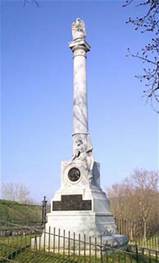
The Sergeant McKinley Monumen
Antietam Battlefield
The inscription reads,:“Sergeant McKinley, Co. E 23rd Ohio Vol. Infantry, while in charge of the Commissary Department on the afternoon of the day of the Battle of Antietam, September 17, 1862, personally and without orders served hot coffee and warm food to every man in the regiment on this spot and in doing so passed under fire.”
In Vietnam every one of our C-ration and LLRP rations contained a package of instant coffee. You could get instant coffee on the local civilian market or at the commissary and we always had hot water available one way or the other. I actually had a little curly cue stick that I could plug into the generator put it into a cup of water and boil the water very quickly.
Mr. John Paul Vann, my civilian mentor in Vietnam wasn’t much of a drinker. He would occasionally have a drink but never during the duty day and he always wanted a cup of hot coffee. The minute that I heard that his helicopter was approaching for a visit first thing that I would do was either make up a pot of coffee if I had time or heat water so that when he got there, I could hand him a hot cup of instant coffee. It seemed that we drank coffee constantly. I guess our intake of coffee wasn’t any different than it was during the civil war.
When you worked with the Navy, they drank something called ‘bridge coffee’. Bridge coffee was extremely strong, and the idea was that on a long night watch it would keep you awake. When I was working with the Navy on PBR boats even there they would keep a pot of coffee going on board. When we were on night ambushes with them, we would drink this coffee that tasted almost like mud. It was strong and heavily caffeinated.
A lot of times when I was going out with my Vietnamese on ambushes at night, I would take a plastic canteen, and I would fill it with coffee and drink it cold. We would always make strong coffee, and it would definitely keep you awake at night laying out there on an ambush.
On one of my assignments at the end of my career, I was assigned to the US Navy base at Norfolk VA on the joint staff. I was the senior army operations officer in the War Room, and the old navy Chief always kept a 64 cup ‘silver bullet’ going in the war room. I would walk into the War Room and the first thing that would happen is either the chief or one of my assistants would automatically hand me a cup of bridge coffee. Tough stuff.
The chief was proud of his coffee pot. It looked terrible. It looked like it had been through a war on its own and it probably had. The coffee that he made was absolutely outstanding, strong, but outstanding. The chief was proud of that pot.
One day we had a young seaman who was assigned to us on a temporary basis. He had been on board a ship in the Mediterranean and had some type of an issue at home where he was required to leave his ship and come back to the states. The Navy put him to work with us in the War Room because of the fact that they really didn’t have any place to put him and secondly, he did have all of the security clearances that were required for that type of an assignment. It’s a problem with the Navy when someone comes off of a ship suddenly like that where do you place them? So, he ended up working for us.
He was a good kid. We didn’t have a lot for him to do at that particular time, but he would clean computers make sure that things were backed up and that printers were full of paper and ink and just generally do all kinds of odd jobs for us in the War Room.
One evening he had the night watch, and he decided that he was going to clean the chief’s coffee pot. I came into work the next morning the chief was mad he was furious he was cussing up like a pissed off sailor. I asked my assistant, Chuck, what was going on. Chuck told me that the reason the chief was so upset with this young sailor because he had not only washed and cleaned the outside of his ‘silver bullet’ so it shone like it was brand new but he had also cleaned the inside. He had scoured it so it’s shown as highly polished as the outside did.
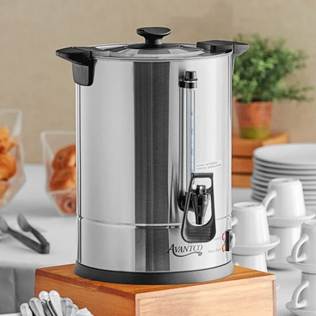
The chief was furious.
I asked him why and he told me that he had been grooming that pot for nearly 30 years and that on the inside of that pot there was a black buildup of old coffee stains on the metal. He told me that those coffee stains were actually oil from the coffee itself that settled into all of the pores of the coffee pot. The acid from the coffee wasn’t working against the aluminum and giving the coffee a metallic taste. That’s why it was always so good to drink. This young sailor had destroyed the coffee taste, and it was that way for a couple of weeks before the chief finally got enough oil back into the inside of the pot to change the taste back to good coffee from metallic aluminum tasting coffee.
Today I still drink a lot of coffee but not nearly as much as I used to I’m down to 8 cups a day as opposed to my normal 20 but I can still remember some really heavy good coffee in Vietnam, some great bridge coffee in Vietnam and my story about the poor chief and his coffee pot.
If you’re enjoying these blogs please drop me a comment or if you have any questions that I might answer, again submit a comment on the comment pages. I’m always glad to hear from you.
Again, please take a look at all of my books that I have listed. They can be purchased from Amazon.com with the click of a button directly from my website, www.ptaylorvietnamadvisor.com. Until next Friday, Have a good week.
The Advisor Series:
- “The Advisor, Kien Bing, South Vietnam, 1969-1970. A Novel” (Available on Amazon ASIN: B09L4X5NQ3)
- “The Province Senior Intelligence Advisor, Kien Song Province 1970-1971; A Novel” (Available on Amazon ASIN: B0BHL2XCX5)
- “The Hardchargers,” Vietnam 1972-1973; A Novel” (Available on Amazon ASIN: B0C7SPR1JY)
- “The Tuscarora Trail” (Available on Amazon ASIN: B0D3QY2GM6)
Check out my website for other books that I’ve written or edited.
Website: ptaylorvietnamadvisor.com
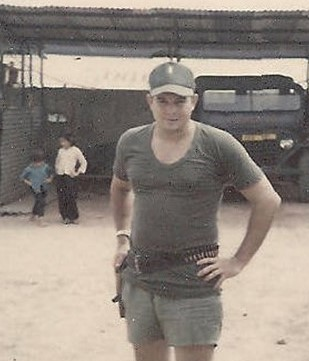
 Peter A. Taylor's Home Page
Leave a comment