Throughout my books I have always tried to use the Vietnamese rank when I was writing about dealing with my counterparts. In all of the books when I have used the rank for the first time I have added a footnote to the page because the Vietnamese language is so much different than is the English version of the same military rank.
So how did we identify our counterparts rank? It was really quite simple and I’ve included a chart to help out.
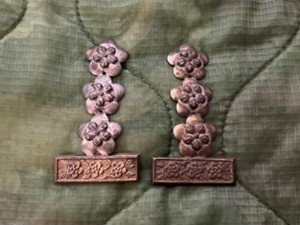
When I first arrived in Vietnam I was a brand new second Lieutenant and I was referred to as a Thiếu úy; pronounced “T we” In Vietnamese. This was the lowest commissioned officer grade in both the United States and the Vietnamese army. My US Army rank Insignia was a single “Gold bar.” In order to ensure that my Vietnamese counterparts could identify my rank I also wore a single “Chrysanthemum ‘pip’” which indicated my rank as a second Lieutenant. My gold bar was actually brown since we wore a camouflaged rank Insignia. I held this rank while I was stationed at Ap Bac (Ap Bing – in my books)
A little over a year after I had arrived in Vietnam I was promoted to the rank of first Lieutenant. I was referred to as a Trung úy; pronounced “Trung we” In Vietnamese. I held this rank while I was serving as the Province Senior Intelligence Advisor from the Fall of 1970 through the Spring of 1971. While the official rank of a First Lieutenant was a silver bar we wore a black bar on our uniform which was considered camouflage. I wore two Chrysanthemum ‘pips’ on my uniform to advise my counterparts of my US Army rank.
When I returned to Vietnam in 1972 I had been promoted to the rank of Captain. When I first arrived in Saigon I wore the US Army rank of two silver bars on my Khaki uniforms. However when I moved to field operations with Vietnamese counterparts I wore three Chrysanthemum ‘pips’ on my uniform to alert my Vietnamese counterparts of my military rank. I was referred to as Đại úy; pronounced “Die we” In Vietnamese. While the official rank of Captain was two silver bars, we wore black double-bars on our uniform which was considered camouflage.
Other officers that I mention in my books were Major Suan, my Intelligence Officer S-2 counterpart. His Vietnamese rank was pronounced Thiếu tá ; ‘Tue Ta’ and his rank consisted of a single gold ‘Pip” on top of a solid gold bar.
Our second District Chief was Lieutenant Colonel Tua. He served as the District Chief of Kien Bien District (Kien Bing in my books). His Vietnamese rank was pronounced Trung tá ; ‘Trung Ta’ and his rank consisted of a double gold ‘Pip” on top of a solid gold bar.
In my books I mention the Province Chief, Colonel Song (Not his real name). His Vietnamese rank was pronounced Đại tá ; ‘Die Ta’ and his rank consisted of a triple gold ‘Pip” on top of a solid gold bar
I’ve attached a chart that shows the South Vietnamese Military rank and it’s counterpart US Army insignia as well as the proper spelling in Vietnamese of the various ranks. I hope that this information aids you in reading my books. I have tried to footnote the books when I discuss military nomenclature that might be ‘ancient history’ to many of my readers. I use to kid people that one of the reasons I retired from teaching JROTC was that one of my students came up to me with a copy of the Army Times and asked me a question about a new piece of military equipment; I had no idea what they were talking about. I realized that I was an entire generation away from the Army and I decided that it was probably time after 43 years of wearing the uniform to retire. So what you read about in my books is over fifty-years-old and two generations removed from today’s military!
The South Vietnamese Army disintegrated over fifty years ago and these ranks are now a part of the dustbin of history. But to a young Army officer they will always be burned into my brain.
Rank Insignia South Vietnam and US Army Comparisons
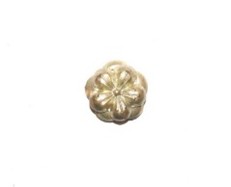 |  | Single ‘Pip’ Second Lieutenant RVN Thiếu úy |
 |  | Double ‘Pip’ First Lieutenant RVN Trung úy |
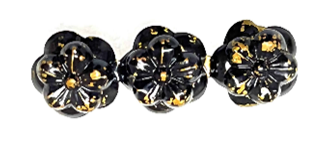 |  | Triple ‘Pip’ Captain RVN Đại úy |
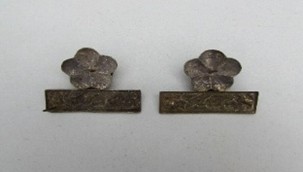 |  | Single ‘Pip” w/bar Major RVN Thiếu tá |
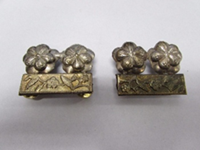 | 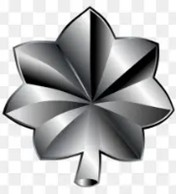 | Double ‘Pip” w/bar Lieutenant Colonel RVN Trung tá |
 |  | Triple ‘Pip” w/bar Colonel RVN Đại tá |
If you’re enjoying these blogs please drop me a comment or if you have any questions that I might answer, again submit a comment on the comment pages. I’m always glad to hear from you.
Again, please take a look at all of my books that I have listed. They can be purchased from Amazon.com with the click of a button directly from my website, www.ptaylorvietnamadvisor.com. All of my books are available in Hard Cover, Paperback and Kindle – I am working to have all of them in Large Print as well.
Until next Friday, Have a good week.
The Advisor Series:
- “The Advisor, Kien Bing, South Vietnam, 1969-1970. A Novel” (Available on Amazon ASIN: B09L4X5NQ3)
- “The Province Senior Intelligence Advisor, Kien Song Province 1970-1971; A Novel” (Available on Amazon ASIN: B0BHL2XCX5)
- “The Hardchargers,” Vietnam 1972-1973; A Novel” (Available on Amazon ASIN: B0C7SPR1JY)
- “The Tuscarora Trail” (Available on Amazon ASIN: B0D3QY2GM6)
Check out my website for other books that I’ve written or edited.
Website: ptaylorvietnamadvisor.com
 Peter A. Taylor's Home Page
Leave a comment