Recently I was watching a movie about some soldiers in Afghanistan and I noticed that they were wearing this device on their helmet. It was night time and occasionally they would lower it and look out across the horizon and detect movement. It was a modern night vision device. I had to laugh because when I first arrived in Vietnam we were experimenting with a night vision device called a Starlight scope.
The soldiers in the movie wore their device on their helmet it was small and very convenient for them to use. When I first had an opportunity to see a Starlight scope in Vietnam it looked like a large telescope. It was mounted on a large tripod and it was in one of the towers in the base camp area. An observer at night could sit in the tower and scan across the Plain of Reeds and see movement out to about 100 yards if conditions were perfect.
When I worked with the Navy we would place the Starlight scope on the deck of a PBR and watch for movement along the canals. The Starlight scope or AN/PVS-2 allowed us to observe movement. The thing that was most obvious was when looking through the lens at this green background we would spot someone carrying a weapon. Light would reflect off of the metal and it would show up as a bright glare. One ambush that I described in my book we were able to tell the difference between the men who were carrying weapons and the local citizens that were being used as human shields. The villagers we’re carrying very small amounts of metal with them whereas the Việt Cộng were armed. It was evident who the bad guys were.
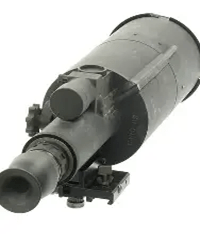
These scopes were bulky and you had to have some degree of training and using them in order to accurately detect movement and then to identify what we were really looking at. In our case the Mekong delta was so flat that as long as we were above the reeds we did not have much trouble identifying movement. One thing that it did do was allow us to spot the difference between people moving and water Buffalo moving through the undergrowth. There are all kinds of stories from Vietnam where soldiers thought they were engaging large groups of enemy combatants and come to find out when all of the shooting was done they had slaughtered a couple of water Buffalo. While that might mean beef on the grill the next day the locals were generally quite upset if we killed there, basically, tractors.
The Starlight scopes that we were using we’re a significant advancement and electronics and optics and as a result they paved the way for better and lighter systems that are currently used today
But these were first generation passive night vision devices it didn’t rely on infrared light or any other light form instead it amplified very low existing light sources such as Starlight or moonlight. It amplified whatever light was out there through a series of image intensifying tubes to create a visible image.
The Starlight scope was an interesting technological accomplishment. It weighed about 6 1/2 lbs. without its carrying case and it made it manageable for soldiers in the field to carry. It had a four power magnification and it allowed us to observe enemy movement without giving away our position. In our case it was primarily used for perimeter defense. However there were combat patrols that I went on that we did carry the Starlight scope. It allowed us to be a lot smarter at night, we were able to visualize what was in front of us or around us without giving away our position. It allowed us to do something that the Việt Cộng and NVA had done for years and that was to take back control of the night.
In my books I often talk about going out on daytime patrols, we called them ‘mosquito swats,’ or ‘walks-in- the-Sun.’ Our Vietnamese counterparts generally ended all of their operations by dusk and that’s when the NVA or Việt Công started making all of their major movements. They owned the night because we didn’t do anything to try to control it. We would set up ambushes on occasion only because it was expected that our counterpart would do that and I don’t remember any of those ambushes actually accomplishing anything initially.
Once our new district chief came on board, Lieutenant Colonel Tua, that changed. He was an aggressive commander and for the next three months we conducted night operations and totally disrupted the movement of the North Vietnamese and Việt Công through our district. He was a very intelligent Vietnamese officer, trained at the US Army’s Command and General Staff College at Fort Leavenworth Kansas, he spoke excellent English, and he was a college educated engineer. He understood the importance of the Starlight scope in taking back the night from the Việt Công.
When we were able to couple the Starlight scope with our enhanced use of ground sensors we were able to conduct some excellent combat operations. Our anti-intrusion sensors were very primitive compared to what is used today in the military. We would set them up along known infiltration routes and wait and watch for movement. If we were lucky and we were timing our sensors correctly we were able to determine where groups of soldiers were infiltrating. Based upon general knowledge of the terrain it would tell us where they were going to cross either a river or a major canal. We could set up our ambushes on the opposite bank and catch them as they were moving. When we coupled the sensors with the Starlight scope not only were we able to track movement but we were able to identify our targets and engage them at a greater distance. It also ensured that, while we were in an ambush position, that we didn’t get counter ambushed by them.
As I’ve said the Starlight scope that we carried was rudimentary at best. It had a lot of limitations. We had to worry about environmental conditions, it was useless if it was foggy, we had to have it in a position where it could see for a distance which was often difficult in the flat area of the Plain of Reeds where we operated. It was heavy and cumbersome and it was difficult to operate without training. It required a lot of adjustments and it was easy to screw the system up especially when it was used during the monsoon. The lens had a tendency to fog up and it was difficult at that time to keep them cleaned off.
It did help us and improve our mission capabilities. One thing we were able to do was mount it on our boat, which gave us some mobility in the field as well as the ability to observe things at night.
Watching that movie about our troops in Afghanistan brought back some interesting memories, looking through that lens on that greenish horizon watching for movement seeing the flickering of moonlight or Starlight on metal images and knowing that we were about ready to go into combat action. Things have changed enormously in the last 50 years. Our soldiers today own the night. They have the capability of observing and operating unlike the way we did in Vietnam.
If you’re enjoying these blogs please drop me a comment or if you have any questions that I might answer, again submit a comment on the comment pages. I’m always glad to hear from you.
Again, please take a look at all of my books that I have listed. They can be purchased from Amazon.com with the click of a button directly from my website, www.ptaylorvietnamadvisor.com. Until next Friday, Have a good one.
The Advisor Series:
- “The Advisor, Kien Bing, South Vietnam, 1969-1970. A Novel” (Available on Amazon ASIN: B09L4X5NQ3)
- “The Province Senior Intelligence Advisor, Kien Song Province 1970-1971; A Novel” (Available on Amazon ASIN: B0BHL2XCX5)
- “The Hardchargers,” Vietnam 1972-1973; A Novel” (Available on Amazon ASIN: B0C7SPR1JY)
- “The Tuscarora Trail” (Available on Amazon ASIN: B0D3QY2GM6)
 Peter A. Taylor's Home Page
Leave a comment