The Plain of Reeds is a vast inland wetland. Most of the area we are discussing is now a part of Long An Province and Đồng Tháp Province in the country of Vietnam. When I was stationed there our province was called Kien Tuong with the Provincial Capital at the town of Moc Hoa (Moc Loi in my books).
At one time (pre-Angor Wat) the entire area was a part of a river system that was actually the main water route from Cambodia to the South China Sea. But over time the entire area silted in, and the early Khmer settlers abandoned the area. At one time it covered over 2.2 million acres. The French colonizers drained large parts of the Plain of Reeds and created a massive canal system in the area. The current government of Vietnam has created a large National Park to try and protect and conserve this interesting wetland.
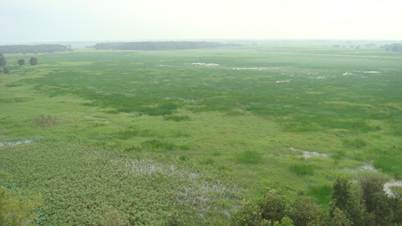
The Vietnamese name is Đồng Tháp Mười which means “The Black Swamp”. The soil is highly acidic as a result of centuries of rotting debris.
This area was heavily used by the Việt Cộng (VC) and the North Vietnamese Army (NVA) to infiltrate men and supplies into the Mekong Delta. A large part of those routes came through our Province and district. Part of my responsibilities as a Military Intelligence officer was to locate those routes and interdict their movements.
We relied on a number of methods of locating those movements. During the monsoon season the VC/NVA relied on the myriads of small canals and streams to float men and supplies into the Delta. Movement during the monsoonal period was difficult and once we realized where the actual infiltration routes were located, which canals and streams that were being used, we could set up ambush position to interdict these movements.
We worked with the U.S. Navy River divisions to conduct ambushes and block some of the larger routes. We would also use Vietnamese soldiers to conduct ambushes along prominent canals and streams backed up by an excellent artillery battery located at Ap Bac.
During my assignment to Ap Bac we began a variety of early electronic sensors to detect movement. Initially we would set these sensors out around our bases of operation and detect movement. If movement was detected generally, we would initiate artillery or mortar fire on these anti-intrusion devices. I’m sure that in the long run we killed a lot of wildlife as well as a few grazing water buffalo. I doubt if we ever really stopped enemy movements.
A few months into my tour the Navy Intelligence Liaison Officer (NILO) and I came up with an experimental plan to see if we couldn’t use these unattended sensors to disrupt infiltration. We had a good idea of where the ground infiltration routes were located and as a result, we established a set of sensor strings at three separate points along one of the trails that we felt were most frequented by enemy units attempting to enter our area of responsibility.
Rather than shoot at the movements we monitored the level of activity as well as the direction of travel. When they crossed the second set of sensors we could identify the vulnerable crossing points along the Grand Canal and establish very effective ambushes. As a result of this experiment, we were able to significantly reduce movements through our area.
The entire area changed during the six-month dry season. As the swamps dried out the entire infiltration picture changed. Movement was no longer restricted to movements along the waterways. Our sensor strings needed to be placed across some of the land routes. We had been very successful in interdicting infiltration along the canals and streams, but the dry season presented some additional difficulties. We had a larger area to cover, and we had to reset our sensors across vast areas of tall elephant grass.
Because of our successes during the monsoonal period Saigon was willing to give us additional sensors and we began spreading them along suspected infiltration routes as soon as we were able to physically get back on the ground. Once again, we were somewhat successful.
One afternoon the NILO reported a major activation of our sensors along one of the suspected infiltration routes. I contacted the S-2 (Province Senior Intelligence Advisor) at Moc Hoa, the Province headquarters for MAC-V Advisory Team – 85 and explained what we were sensing regarding a major movement. The S-2, Lieutenant Jim Norred, contacted the Operations Center and notified the aviation section of a possible contact. Air Operations dispatched a Light Observation Helicopter along with two Cobra gunships to investigate.
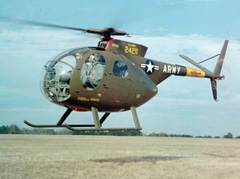
OH-6A “Cayuse” Helicopter “LOACH”
The Loach flew close to the ground twisting it’s rotors from side to side to disturb the “elephant grass” and to see what underneath was. They could see the indistinct markings of a trail made by a large number of men walking in the head-high grass. Suddenly they took incoming small arms fire. The pilots of the “Loach” marked the target area with smoke grenades and exited abruptly.
What those on the ground didn’t observe were the two Cobra gunships that were hovering high above the Cayuse chopper. Once the OH-6A was safely out of the way these two killers ‘sharks’ flew into the contact area with guns and rockets blazing.
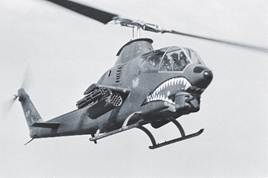
AH-1 Cobra Gunship
Within a matter of minutes, the Cobra’s had laid down a tremendous amount of ordnance on a relatively small area. Our ARVN unit was sent into the area to ‘clean up’, secure prisoners and gather intelligence.
We found a large number of dead and wounded as well as large quantities of supplies of ammunition and other supporting materials. I managed to gather some maps and documents from the dead and the wounded.
I found what I supposed was the NVA commanding officer, a Major. He was severely wounded, and we treated his wounds in the field as best we could. When we found him, he was beating on a young officer with a bamboo cane and yelling at him, “how many times do I have to tell you, idiot, never shoot at the little ones! NEVER shoot at the little ones!”
If you’re enjoying these blogs please drop me a comment or if you have any questions that I might answer, again submit a comment on the comment pages. I’m always glad to hear from you.
Again, please take a look at all of my books that I have listed. They can be purchased from Amazon.com with the click of a button directly from the website. Until Friday, Have a good one.
The Advisor Series:
- “The Advisor, Kien Bing, South Vietnam, 1969-1970. A Novel” (Available on Amazon ASIN: B09L4X5NQ3)
- “The Province Senior Intelligence Advisor, Kien Song Province 1970-1971; A Novel” (Available on Amazon ASIN: B0BHL2XCX5)
- “The Hardchargers,” Vietnam 1972-1973; A Novel” (Available on Amazon ASIN: B0C7SPR1JY)
- “The Tuscarora Trail” (Available on Amazon ASIN: B0D3QY2GM6)
Check out my website for other books that I’ve written or edited.
Website: ptaylorvietnamadvisor.com
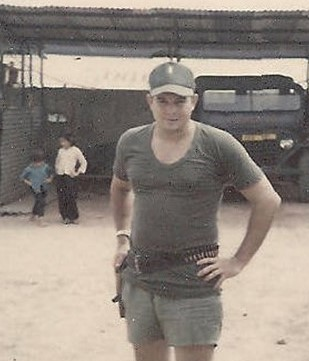
 Peter A. Taylor's Home Page
Leave a comment