10 February
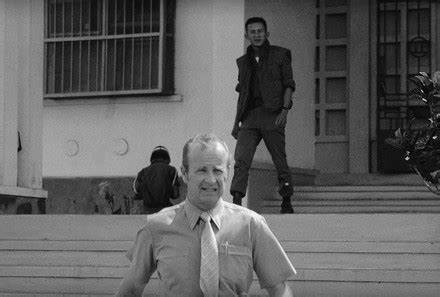
In my books I often refer to my professional relationship with two men, John Paul Vann and Colonel David Hackworth. In this week’s blog I’ll discuss my relationship with Mr. John Paul Vann.
My recollections of Mr. Vann are nothing like those expressed by Neil Sheehan in his book “A Bright and Shining Lie: John Paul Vann and America in Vietnam”. But, of course, I viewed Mr. Vann from a totally different perspective than Mr. Sheehan; I respect his research on his excellent book.
To me John Paul Vann was a taskmaster, a mentor and a fine superior. I was amazed that he sent me to Ap Bac (Ap Bing in the book) as an advisor on an ‘experimental special team’. I was such a young and inexperienced officer (I had only been a commissioned officer for about four months) that I would have thought that he would want a more senior and experienced officer to fill the position. To this day I don’t know what he saw in me, but I valued and deeply respected his trust and confidence.
Mr. Vann was compelled to retire from the US Army after accurately reporting the unwinnable situation in Vietnam to the Pentagon leadership. He returned to Vietnam as the senior civilian in charge of the Office of Civil Operations and Rural Development Support (CORDS) operations in the Mekong Delta. That is where I met him in 1969.
Mr. Vann would arrive unannounced, expecting us to be prepared at all times to deliver a comprehensive briefing and demonstrate a thorough understanding of our area of responsibility. He would pose probing questions and demand prompt and accurate information.
I later discovered that he possessed a near-photographic memory and would read the daily reports while flying into our area. I realized that my role was merely to confirm that I understood the reports. Additionally, I understood that it was crucial for him to convey supplementary information not included in the brief daily report. It was important for him to know the who, where, and what of our activities.
Mr. Vann was responsible for setting up my three-man District team at Ap Bac. The area was relatively pacified, and our risk wasn’t that great. In order to enhance our capabilities as advisors he determined that we should live with our counterpart in his house.
The District Chief’s house was an old French colonial building that had been used as a rice warehouse, and an administrative building. There was adequate space for the three Americans to have a bedroom and office space. Eventually we added another room that had once been a garage. We used that room for briefings and as a ‘living room’.
We hired a maid and a ‘man-Friday’ to take care of basic ‘housekeeping’ chores. This allowed us to maximize our time as advisors without getting bogged down with basic subsistence operations. We were given an allowance to pay for our helpers as well as reimbursing the District Chief for feeding us.
Mr. Vann, I found out early in my assignment, was a stickler for military protocol. When he flew into our district, he expected us to be in complete military uniform. Boots at least brushed off, fatigue jackets properly worn, and hats worn outside the buildings. Even though he was a civilian, as a retired military officer, he expected a crisp military salute when we first greeted him.
Mr. Vann expected a formal briefing on each of his visits as well as a meeting with our senior counterparts. As a briefer I learned early to save one small piece of intelligence to insert into my briefings. It was usually a small issue that wasn’t important enough to post in the daily intelligence summaries. For example, it might be an un-substantiable sighting of a tax collection element, a road mine that had been found and deactivated, or a report of an enemy action in the area that had been taken care of without incident.
Whatever it was I could insert it into the brief and Mr. Vann was always impressed that I “knew more that he did”! I always made sure that the Vietnamese officers who were involved in our operations were listed by name and locations were as exact as possible. He always seemed to like my briefings and my ‘style’.
When I arrived in the Mekong Delta as a Second Lieutenant it seems that I was the only ‘Butter Bar’ in the Delta at the time. The US Army was in a drawdown mode and only more senior officers were being assigned to the Phoenix Program (something I’ll discuss in a future blog). Shortley after I arrived the Delta Command had a new General officer assigned and he needed an Aide-de-camp. Mr. Vann protected me from being assigned as General Wilson’s Aide-de-camp. Since I was assigned to the “Phoenix Program” I belonged to Mr. Vann, and I wasn’t eligible for an assignment outside of that area of responsibility.
Mr. Vann was also instrumental in obtaining my second assignment in Vietnam as the Province Senior Intelligence Advisor (detailed in the second book of the series). I had already applied for a six-month extension and Mr. Vann insisted that I take an assignment other than the one that I currently held; according to him I needed ‘career development’.
I asked for his support to move up to the province capital of Kien Tuong province at Moc Hoa (Moc Loi in my books) and serve as the Province Senior Intelligence Advisor (PSIA). The current PSIA was about ready to DEROS (end his tour and go home) and they were looking for a replacement. Mr. Vann concurred and felt that I could handle the assignment, But…..!
The Province Senior Intelligence Advisor of a border province was considered to be a critical intelligence assignment. Since we shared a border with Cambodia the PSIA was traditionally a senior Captain or a Major. I was a relatively junior First Lieutenant at the time, having been promoted in June of 1970.
Mr. Vann had to go to Saigon and argue my assignment with the Commanding General of Military Assistance Command (COMUSMACV), General Creighton Abrams and get the concurrence of General Westmoreland who happened to be in Saigon on a senior staff visit at the time. Initially they were reluctant to make the assignment, but Mr. Vann prevailed, and I got the position.
Jumping ahead to the Spring of 1973, I found myself back on orders to return to Vietnam for a third tour of duty. Rather than being an ‘unassigned’ officer I sent letters to my former team, Team-85 in the Delta and to Mr. Vann indicating that I was returning and asking for an assignment.
The Province Senior Advisor for Team-85 indicated that they were in a state of total flux and that they couldn’t request my reassignment. However, I received a wonderful letter from Mr. Vann in late May 1973. He offered me an assignment as the Intelligence Liaison Officer for II Corps. It would have been a wonderful experience! He added a personal handwritten note to the bottom of the letter indicating that he was happy to hear that I was coming back to his command but that things were in real flux at this point in time. Unfortunately, I found out a few days later that he had been killed in a helicopter crash. I retain that cherished correspondence in my files today.
Mr. Vann was a controversial figure. He had many detractors, but I will always remember him as a great man, a mentor and a friend.
An Aside!
My novels contain a lot of military jargon used by soldiers in Vietnam. It also contains a number of Vietnamese terms and phrases. I have tried to be accurate in writing the Vietnamese text. I have added ‘’footnotes’ to assist the reader in understanding the terms that are used. I hope that this helps. If you have a question regarding acronyms or Vietnamese terms, please feel to comment.
Next week
Next week’s topic: Colonel David Hackworth
If you’re enjoying these blogs please drop me a comment or if you have any questions that I might answer, again submit a comment on the comment pages. I’m always glad to hear from you.
Again, please take a look at all of my books that I have listed. They can be purchased from Amazon.com with the click of a button directly from the website. Until Friday, Have a good one.
The Advisor Series:
- “The Advisor, Kien Bing, South Vietnam, 1969-1970. A Novel” (Available on Amazon ASIN: B09L4X5NQ3)
- “The Province Senior Intelligence Advisor, Kien Song Province 1970-1971; A Novel” (Available on Amazon ASIN: B0BHL2XCX5)
- “The Hardchargers,” Vietnam 1972-1973; A Novel” (Available on Amazon ASIN: B0C7SPR1JY)
- “The Tuscarora Trail”(Available on Amazon ASIN: B0D3QY2GM6)
Check out my website for other books that I’ve written or edited.
For more information visit my website: ptaylorvietnamadvisor.com

 Peter A. Taylor's Home Page
Leave a comment